Cultivation guide

Mushroom cultivation guide

Ideal conditions, practical tips, and warning signs for each species — the same content used inside CoguPlanner, available for reference before you start growing.

Overview

This guide brings together the recommended temperature, humidity, light, and ventilation conditions for each species, along with practical tips and warning signs observed during cultivation. Use it as a quick reference before starting a new block — to track your actual production, with shelves, blocks, and harvests organized, check out CoguPlanner.

Cultivation stages

The same phases apply to nearly every species — what changes is the timing and ideal conditions for each one.

Phase 1
Colonization
The mycelium (the white "roots") spreads through the entire substrate of the block.
Phase 2
Induction
A change in the environment — more air, light, and humidity — to trigger fruiting.
Phase 3
Pins
Small primordia, the future mushrooms, start to appear.
Phase 4
Fruiting
The mushrooms grow fast, nearly doubling in size each day.
Phase 5
Harvest
The ideal moment to cut, before the caps open too much.
Phase 6
Rest / new flush
The block rests and recovers for the next round of production.

Oyster

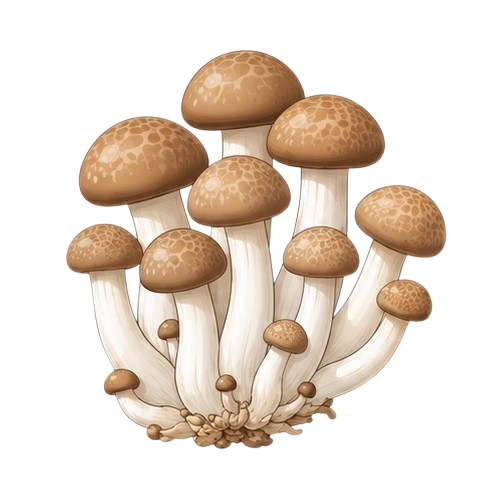
Shimeji Marrom

Shimeji Marrom

OysterEasyGood for beginners
Pleurotus ostreatus · Cogumelo-ostra

The most widely cultivated oyster mushroom in Brazil. Grows fast, forgives small mistakes, and produces well in mild weather — a great pick for beginners.

Temperature
16–22 °C
Humidity
85–95%
Light
Indirect
Ventilation
Medium to high
Colonization
15–25 dias
Fruiting
7–14 days
Substrate
Sawdust + bran, or pasteurized straw
Harvest
Every 2–3 days during the flush
Practical tips
Keep humidity high without soaking the block.
Avoid direct sunlight; prefer indirect light.
Ensure fresh-air exchange to prevent long, thin stems.
Mist the room, not the pins directly.
Check color, smell, and texture every day.
Harvest at the right stage to preserve flavor and texture.
Warning signs
Green, black, or very dark spots
Possible contamination — isolate the block.
Strong or sour odor
Risk of bacterial contamination.
Long stems with small caps
Insufficient ventilation or wrong light.
Dry, cracked block with no pins
Not enough humidity in the room.
Cap too far open
Past the ideal harvest window.
Advanced note

After the 1st flush, let the block rest 7 to 14 days at high humidity — most yield 2 to 3 flushes. Soaking the block in cold water for a few hours helps rehydrate it before the next cycle.
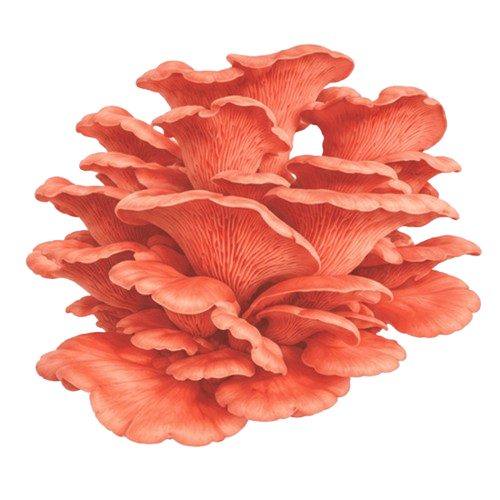
Shimeji Rosa (cogumelo salmão)

Shimeji Rosa (cogumelo salmão)

OysterEasyGood for beginners
Pleurotus ostreatoroseus · Ostra-rosa

A tropical variety with vibrant pink coloring. Loves heat, grows very fast, and is a visual showstopper — but wilts quickly after harvest.

Temperature
18–26 °C
Humidity
85–95%
Light
Indirect
Ventilation
Medium to high
Colonization
12–20 dias
Fruiting
5–10 days
Substrate
Pasteurized straw or sawdust + bran
Harvest
Daily during the flush — grows fast
Practical tips
Best suited to warm climates; don't let it get too cold.
Harvest early: the pink color fades with time.
Sell or eat quickly — short shelf life after harvest.
Keep humidity high during the first pinning days.
Good ventilation prevents thin, wilted caps.
Avoid direct sun to preserve the color.
Warning signs
Pink color fading quickly
Room too warm or harvest delayed.
Dark or green spots
Possible contamination — isolate the block.
Sour odor
Risk of bacterial contamination.
Caps wilting
Low humidity or poor ventilation.
Growth stalled
Temperature below the ideal range.
Advanced note

One of the fastest species: from pin to harvest in just a few days. Plan your sales before inducing, since the ideal harvest window is short.

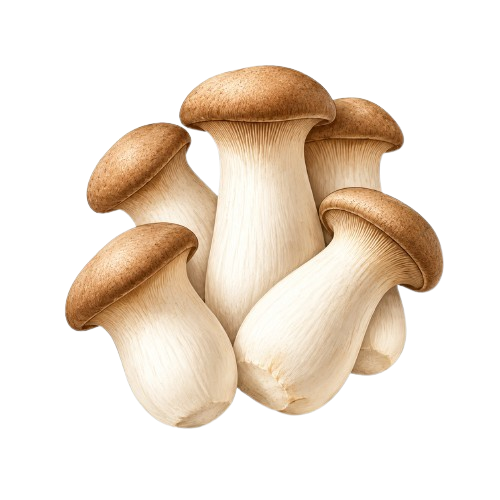
Eryngii

Eryngii

OysterIntermediate
Pleurotus eryngii · King Oyster

Eryngii, also called King Oyster, is a gourmet species valued for its thick stem, firm texture, and mild flavor. Unlike other oyster mushrooms, it's grown to form large, sturdy stems with smaller caps.

Temperature
12–17 °C
Humidity
85–90%
Light
Low / indirect
Ventilation
Medium / controlled
Colonization
14–21 dias
Fruiting
10–20 days
Substrate
Supplemented sawdust / master's mix
Harvest
Thick, firm stem
Practical tips
Use supplemented hardwood sawdust or a well-sterilized master's mix.
Keep fruiting temperatures cooler to favor thick stems.
Control ventilation: too much CO₂ deforms it, but too much airflow opens the cap too wide.
Look for mushrooms with a thick, white, firm stem.
Avoid heat during fruiting — it produces thin stems.
Harvest before the cap opens too much.
Practice good hygiene — supplemented substrates are more contamination-prone.
Warning signs
Thin, elongated stem
Excess CO₂, poor air exchange, or too little light.
Cap opening too wide
Late harvest or too much airflow near the end.
Small, tough mushroom
Low humidity or a block with little available water.
Yellowish base
Excess moisture, aging, or poor ventilation.
Green mold on the substrate
Risk of contamination — isolate the block.
Uneven growth on the block
Poor spawn distribution, compacted substrate, or unstable temperature.
Advanced note

The thick, firm stem is what defines eryngii quality. Cooler fruiting and controlled ventilation prevent thin stems or overly open caps.

Gourmet

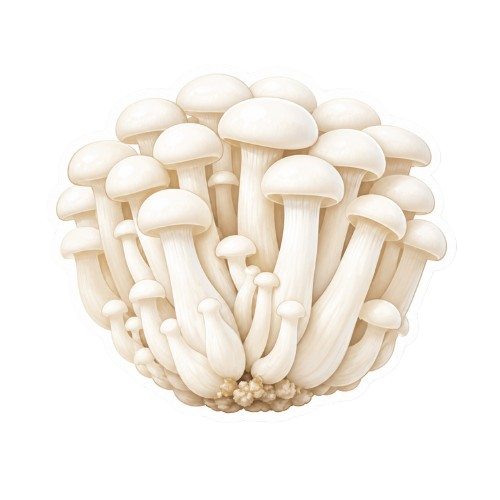
Shimeji Branco

Shimeji Branco

GourmetIntermediate
Hypsizygus tessellatus · Bunapi

The white oyster mushroom, growing in firm, elegant clusters. Mild, slightly sweet flavor once cooked — needs cooler temperatures and a bit more care than the standard oyster mushroom.

Temperature
15–20 °C
Humidity
85–95%
Light
Indirect
Ventilation
Medium
Colonization
20–30 dias
Fruiting
12–18 days
Substrate
Sawdust + enriched bran
Harvest
Harvest the whole cluster at the right stage
Practical tips
Always cook it — raw can taste bitter.
Keep the room cooler (15–20 °C).
Harvest the whole cluster, cutting at the base.
Slightly higher CO₂ helps form firm clusters.
Stable humidity prevents cracked caps.
Avoid direct light to keep the color pale.
Warning signs
Bitter taste when tasted raw
Normal — it needs to be cooked.
Caps cracking
Air too dry in the room.
Loose clusters with long stems
Temperature or CO₂ outside the ideal range.
Dark spots
Possible contamination — isolate the block.
Slow growth
Room too warm.
Advanced note

White oyster mushroom (bunapi) forms dense clusters and is always eaten cooked. It prefers cooler temperatures than the standard oyster mushroom and rewards you with good post-harvest shelf life.

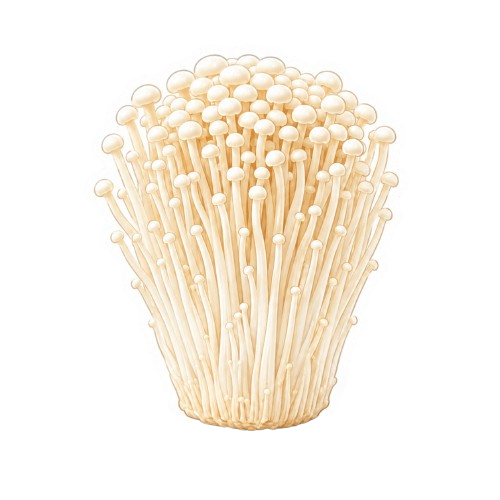
Enoki

Enoki

GourmetAdvanced
Flammulina velutipes · Enokitake

A mushroom with long, thin, pale stems, widely used in Asian cooking. Needs cold and a CO₂-rich environment to form its elongated shape — a challenge for growers who already have the setup for it.

Temperature
8–12 °C
Humidity
80–90%
Light
Low
Ventilation
Low (high CO₂ for long stems)
Colonization
20–30 dias
Fruiting
15–25 days
Substrate
Sawdust + enriched bran
Harvest
Once, when the stems reach length
Practical tips
Keep it cold: 8–12 °C during fruiting.
High CO₂ elongates the stems — reduce ventilation.
Low light keeps the stems pale.
Use a paper collar to guide vertical growth.
High, stable humidity in the first days.
Harvest once the stems reach the desired length.
Warning signs
Large caps with short stems
CO₂ too low or too much light.
Yellowish color
Temperature too high.
Green mold on the surface
Contamination — isolate the block.
Crooked, wilted stems
Unstable humidity.
Growth stalled
Room too warm for enoki.
Advanced note

Commercial enoki (white and elongated) is the result of intense cold and high CO₂ — quite different from its wild form. Requires refrigeration and fine environmental control.

Cogumelo Palha de Arroz

Cogumelo Palha de Arroz

GourmetEasyGood for beginners
Volvariella volvacea · Paddy straw / Palha

A classic tropical mushroom from Southeast Asia, grown on rice straw and widely eaten fresh. Loves intense heat and produces quickly — ideal for warm climates.

Temperature
28–34 °C
Humidity
80–90%
Light
Low indirect
Ventilation
High
Colonization
5–10 dias
Fruiting
3–7 days
Substrate
Pasteurized rice straw or sugarcane bagasse
Harvest
While the caps are still closed and young
Practical tips
Best in warm climates, above 28 °C.
Use well-pasteurized rice straw or sugarcane bagasse.
Colonizes and fruits fast — check on it daily.
Harvest the young caps before they open.
Keep ventilation strong to avoid blotches.
Reuse the spent straw as compost.
Warning signs
Caps opening too fast
Excess heat or a late harvest.
Dark spots on the clusters
Low ventilation or excess humidity.
Green mold on the straw
Inadequate pasteurization.
No primordia forming
Temperature below 24 °C.
Sour odor
Excess standing water.
Advanced note

The paddy straw mushroom is one of the best bets for tropical climates, with a short cycle. Plan for daily harvests, since the ideal window is narrow — and reuse the spent straw as organic matter.

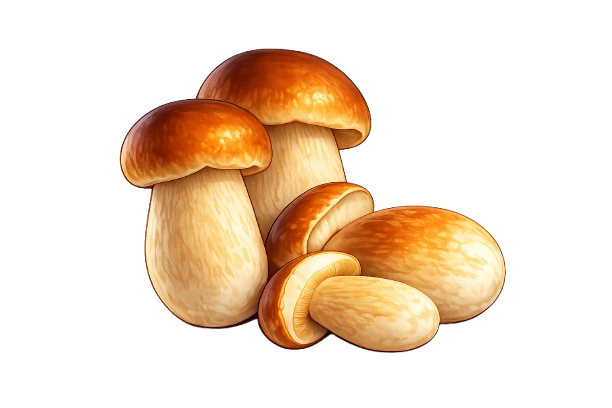
Porcini

Porcini

GourmetAdvanced
Boletus edulis · Boletus

A highly prized mycorrhizal fungus in gastronomy, with a brown cap and firm flesh. Difficult to grow commercially — most of it still comes from wild foraging. For growers up for the challenge of inoculating trees.

Temperature
15–20 °C
Humidity
80–90%
Light
Indirect
Ventilation
Medium
Colonization
60–90 dias
Fruiting
Cycle of months to years
Substrate
Symbiosis with tree roots (oak, pine)
Harvest
While the cap is still closed and firm
Practical tips
Requires host trees — doesn't grow on a block.
Inoculate saplings in moist, shaded soil.
Expect years before the first fruiting bodies.
Harvest with the cap closed for the best flavor.
Confirm identification with a specialist.
Avoid disturbed or polluted soils.
Warning signs
Larvae in the stem
Late harvest.
Greenish pore tubes
Past the ideal harvest window.
Confusion with toxic species
Misidentification — never eat without certainty.
No fruiting bodies for years
Mycorrhiza still establishing.
Dry or poor soil
Unfavorable conditions for the mycorrhiza.
Advanced note

Commercial porcini production still hasn't been mastered — the fungus is mycorrhizal and depends on host trees. Consider planting saplings as a hobby or research project, always with careful identification before eating anything.

Medicinal

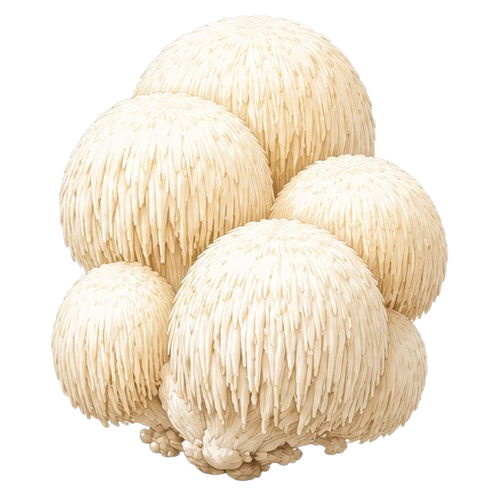
Juba de Leão

Juba de Leão

MedicinalIntermediate
Hericium erinaceus · Cabeça de macaco

A white medicinal mushroom shaped like a cascade of spines. Its flavor resembles seafood and it's in high demand — but it needs a more controlled environment.

Temperature
18–24 °C
Humidity
80–90%
Light
Low and indirect
Ventilation
Medium
Colonization
14–24 dias
Fruiting
10–20 days
Substrate
Hardwood sawdust + bran
Harvest
Once per flush, at the right stage
Practical tips
Keep humidity stable, without big swings.
Don't mist the spines directly.
Harvest before the spines turn yellow.
A low-light environment favors the shape.
Moderate ventilation prevents compact caps.
Handle gently: it's delicate.
Warning signs
Spines turning yellow or brown
Past the ideal stage or room too dry.
Compact shape, no long spines
CO₂ too high — increase ventilation.
Dark spots
Possible contamination — isolate.
Dried-out surface
Insufficient humidity.
Very slow growth
Temperature outside the ideal range.
Advanced note

Yields best when humidity stays stable between 85–90%. Big swings leave the spines short. Usually gives 2 flushes with good management.

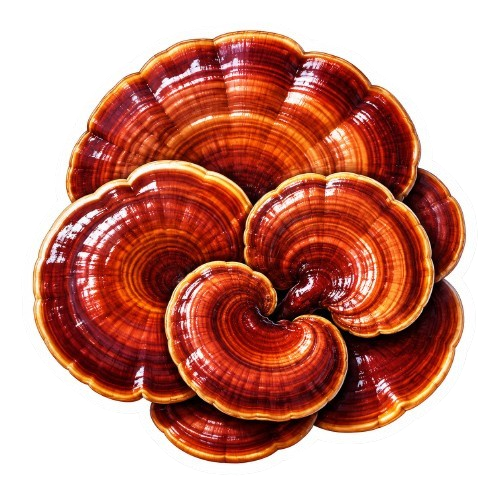
Reishi

Reishi

MedicinalAdvanced
Ganoderma lucidum · Cogumelo da imortalidade

A hard, lacquered medicinal mushroom used in teas and extracts. Long, demanding cycle for CO₂ and humidity — recommended for growers with some experience already.

Temperature
22–28 °C
Humidity
85–95%
Light
Indirect
Ventilation
Low (high CO₂ for antlers)
Colonization
20–35 dias
Fruiting
Long cycle
Substrate
Hardwood sawdust + bran
Harvest
At the end of the cycle, once it sporulates
Practical tips
Likes heat: keep it above 22 °C.
High CO₂ early on produces antler-shaped growth.
Lower CO₂ afterward to form the cap.
Long cycle — don't rush it.
High, constant humidity is essential.
Harvest once the white rim disappears.
Warning signs
Only antler growth, no cap
CO₂ too high during the capping phase.
Brown powder (spores) in the room
Already past the harvest window.
Green spots
Contamination — isolate the block.
Growth stalled
Temperature too low.
Dried-out surface
Insufficient humidity.
Advanced note

Shape depends on CO₂: too much CO₂ forms "antlers", too little forms the classic cap. One of the longest cycles — plan for weeks of cultivation.

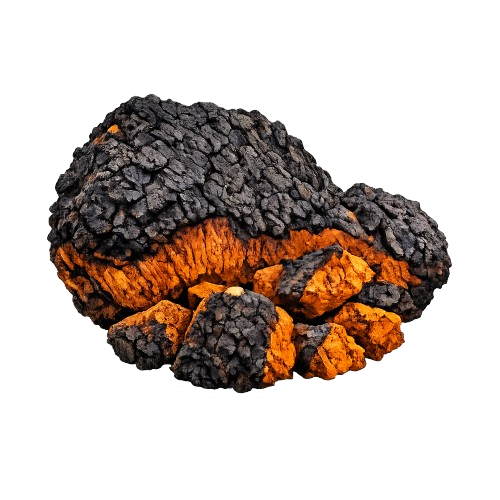
Chaga

Chaga

MedicinalAdvanced
Inonotus obliquus · Cogumelo da bétula

A medicinal fungus that grows as a dark, charred-looking crust (the "conk") on live birch trees, used in teas and extracts. It doesn't form a classic mushroom and cultivation is slow — suited to growers who already have the setup and patience for it.

Temperature
10–18 °C
Humidity
70–85%
Light
Low
Ventilation
Low
Colonization
30–60 dias
Fruiting
Long cycle (months)
Substrate
Birch logs (plug spawn)
Harvest
Once the conk gains solid mass
Practical tips
Use birch logs — its natural host.
Colonization is slow; count in months, not weeks.
Keep the logs shaded and at a stable humidity.
Protect from direct sun, which cracks the bark.
Harvest only the dark, dry conk.
Check the legality and safety of use in your region.
Warning signs
Dry or cracked bark
Low humidity or direct sun on the logs.
Competing fungi on the log
Other species colonizing the wood.
Green mold on the plug
Contamination — isolate the log.
Growth stalled
Log too young or low in nutrients.
Conk soft or darkened
Deterioration from excess moisture.
Advanced note

Chaga is more often harvested from the wild or from logs inoculated years earlier than produced at scale. It's known for functional use in teas and extracts — study safe, legal practices before investing in it.

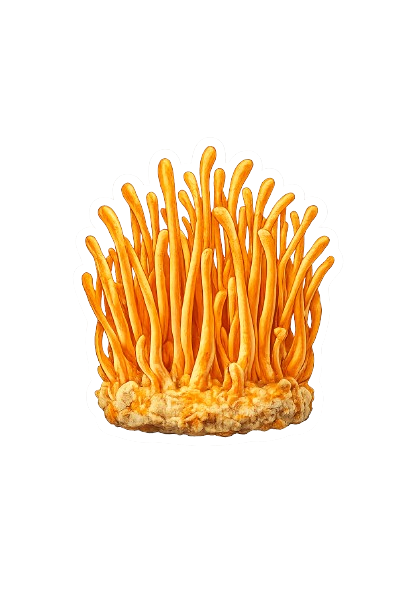
Cordyceps

Cordyceps

MedicinalAdvanced
Cordyceps militaris · Cordyceps militaris

An orange medicinal mushroom, famous for the fruiting bodies that emerge like threads from a grain substrate. Widely used in supplements for energy and immunity — requires lab-grade contamination control.

Temperature
18–22 °C
Humidity
85–95%
Light
Low (dark during colonization)
Ventilation
Medium
Colonization
15–25 dias
Fruiting
12–20 days
Substrate
Supplemented brown rice or grain
Harvest
Before the bodies open and sporulate
Practical tips
Sterilize the substrate rigorously — it's very sensitive.
Keep 18–22 °C with high humidity during fruiting.
Diffuse light during fruiting elongates the fruiting bodies.
Good ventilation reduces bacterial risk.
Harvest the orange strands before they sporulate.
Log every batch to track yield.
Warning signs
Sour or slimy substrate
Bacterial contamination — discard the batch.
Green or black mold
Insufficient sterilization.
Short, stunted bodies
Lack of diffuse light or ventilation.
Whitish coloring
Low humidity or temperature outside the ideal range.
Early sporulation
Delayed harvest.
Advanced note

Cultivation uses the cultivable species (C. militaris), which is far more viable than the wild one. The process resembles a culture-lab routine — start with small batches until you've mastered asepsis.

Tremella (fungo da neve)

Tremella (fungo da neve)

MedicinalIntermediate
Tremella fuciformis · Snow fungus / Cogumelo nevado

A translucent, gelatinous white fungus, widely used in Asian cuisine and cosmetics (known as "skin collagen"). It forms structures resembling ice flowers and needs very high humidity.

Temperature
20–26 °C
Humidity
90–95%
Light
Low / indirect
Ventilation
Medium
Colonization
10–15 dias
Fruiting
10–20 days
Substrate
Enriched sawdust + rice bran
Harvest
Once the "flowers" turn translucent and firm
Practical tips
Keep humidity very high, above 90%.
A warm, stable environment favors the flower shape.
Avoid strong light — it discolors and dries it out.
Harvest the globular structures before they mature.
Good ventilation prevents excess condensation.
Use an enriched substrate for larger fruiting bodies.
Warning signs
Dehydrated structures
Humidity too low in the room.
Brownish color
Strong light or a late harvest.
Green mold on the substrate
Contamination — isolate the batch.
Deformed shape
Temperature or CO₂ fluctuation.
Waterlogged substrate
Standing water — ventilate.
Advanced note

Tremella is known for its hydrating use and appears in Asian soups and drinks. Cultivation requires high humidity and fine control — a good pick for growers who already master oyster mushrooms and want to diversify.

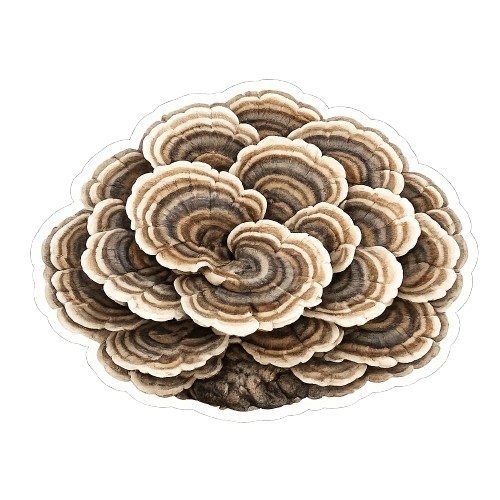
Cauda de Peru

Cauda de Peru

MedicinalEasyGood for beginners
Trametes versicolor · Turkey Tail

A fan-shaped mushroom with bands of earthy tones, growing in rows on wood. Widely studied for immune support — one of the easiest species to grow on sawdust.

Temperature
15–25 °C
Humidity
75–85%
Light
Low
Ventilation
High
Colonization
20–30 dias
Fruiting
15–25 days
Substrate
Hardwood sawdust
Harvest
Once the cap's bands are well defined
Practical tips
Use hardwood sawdust for the best results.
Very forgiving — a great starting point for wood cultivation.
Keep humidity moderate and stable.
Ventilate well to avoid blotches and mold.
Harvest young fans with well-defined bands.
Can be used dried in teas and extracts.
Warning signs
Dark spots on the cap
Low ventilation or excessively high humidity.
Green mold on the substrate
Contamination — isolate the batch.
Small, thin fans
Weak substrate or an early harvest.
Faded coloring
Strong light or a dry environment.
Growth stalled
Temperature outside the ideal range.
Advanced note

Turkey tail (Trametes versicolor) is one of the most studied medicinal mushrooms. It grows well on hardwood sawdust and is one of the most accessible species — a good choice for starting out with wood-based cultivation.

Wood

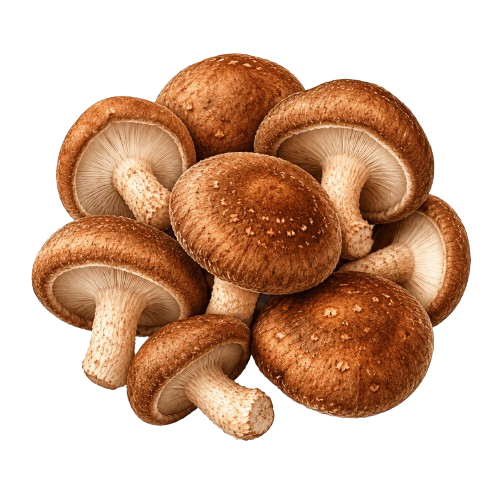
Shiitake

Shiitake

WoodIntermediate
Lentinula edodes · Cogumelo do carvalho

A classic of Asian cuisine, grown on hardwood sawdust blocks. Long colonization, but very productive and highly valued.

Temperature
15–22 °C
Humidity
80–90%
Light
Indirect
Ventilation
Medium to high
Colonization
30–60 dias
Fruiting
20–30 days
Substrate
Eucalyptus/oak sawdust + bran
Harvest
Once per flush; cold-shock between flushes
Practical tips
Be patient: colonization takes a long time.
Wait for the block to turn brown and firm before inducing.
A cold-water shock triggers fruiting.
Good ventilation improves the flesh's texture.
Let the block rest well between flushes.
Harvest before the cap fully opens.
Warning signs
Soft or leaking block
Excess water or contamination.
Green mold on the surface
Trichoderma contamination — isolate.
Won't fruit after browning
Missing the temperature/humidity shock.
Cracked caps
Air too dry during growth.
Sour odor
Risk of bacterial contamination.
Advanced note

The block needs to "mature" (turn brown) before it will fruit — this can take weeks. Between flushes, soak the block in cold water for 12–24h to trigger the next cycle.

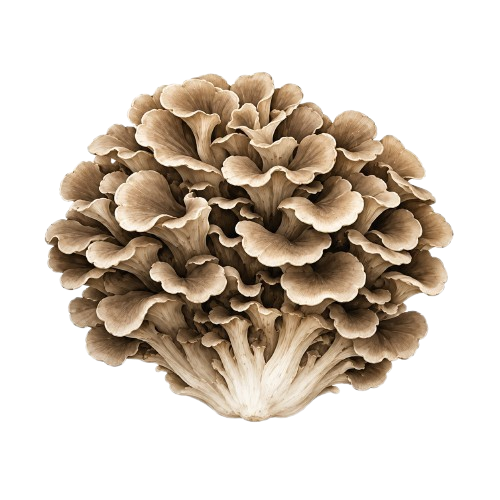
Maitake

Maitake

WoodAdvanced
Grifola frondosa · Hen-of-the-woods

Maitake, also known as "hen-of-the-woods", is a gourmet and medicinal mushroom grown mainly on wood-based substrates. It forms rosette structures with several overlapping fronds and requires more patience than beginner species.

Temperature
10–16 °C
Humidity
85–90%
Light
Low / indirect
Ventilation
Medium
Colonization
30–60 dias
Fruiting
14–28 days
Substrate
Supplemented hardwood sawdust
Harvest
Firm, well-formed rosette
Practical tips
Use hardwood sawdust, such as oak, with controlled supplementation.
Keep the block colonizing longer than common oyster mushrooms.
Avoid excess heat during colonization.
Induce with a cooler, more stable environment.
Select the larger, darker primordia to carry through fruiting.
Avoid misting the fronds directly.
Harvest once the rosette is firm, open, and has healthy edges.
Warning signs
Colonization very slow
Can be normal, but also check for a dry substrate, wrong temperature, or weak spawn.
Block overheating
Supplemented substrates can heat up and damage the mycelium.
Small primordia that don't develop
Missing a cold shock, unstable humidity, or poor ventilation.
Dried fronds at the edges
Air too dry or too much direct airflow.
Green mold on the block
Risk of contamination — isolate the block.
Rosette darkening or softening
Late harvest, excess water, or low air exchange.
Advanced note

After colonizing, the block needs to build up strength before the cold induction. Select the strongest primordia — they form the large, firm rosette characteristic of this species.

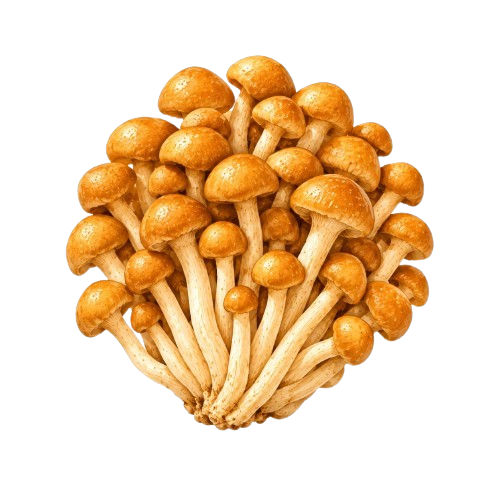
Nameko

Nameko

WoodIntermediate
Pholiota nameko · Nameko

Nameko is a very popular mushroom in Japanese cuisine, known for its small, orange caps with a naturally gelatinous texture. It's grown on sawdust or wood logs and needs high humidity to form glossy, uniform mushrooms.

Temperature
12–18 °C
Humidity
90–95%
Light
Low / indirect
Ventilation
Medium
Colonization
25–45 dias
Fruiting
7–14 days
Substrate
Wood sawdust + bran
Harvest
Amber, glossy caps
Practical tips
Use hardwood sawdust with light bran supplementation.
Keep humidity high, but without standing water on the mushrooms.
The gelatinous look of the cap is normal and desirable.
Avoid dry or direct airflow, which can crack the caps.
Harvest the clusters once the caps are formed, glossy, and still small.
Cut the stems close to the base with a clean tool.
Practice strict hygiene — humid environments favor contamination.
Warning signs
Dry or cracked caps
Low humidity or too much direct airflow.
Mushrooms very slimy and dark
Excess water or a late harvest.
Few primordia
Lack of environmental stimulus, high temperature, or an immature block.
Dark spots on the cluster
Excess accumulated moisture or low air exchange.
Green mold on the substrate
Risk of contamination — isolate the block.
Long, fragile stems
Low light or an imbalance between ventilation and CO₂.
Advanced note

The glossy, gelatinous look of the cap is normal and valued. Harvest the clusters as soon as the caps reach an amber color, before they darken or soften too much.

Compost

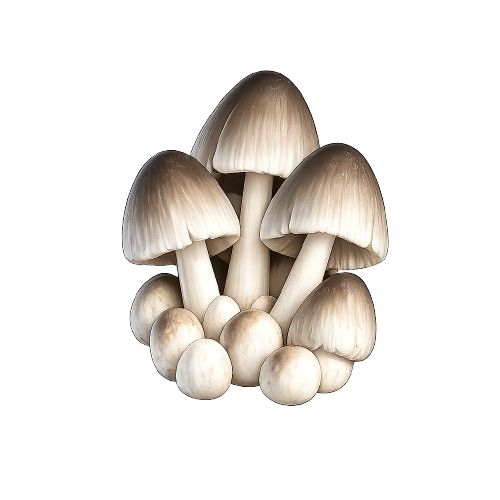
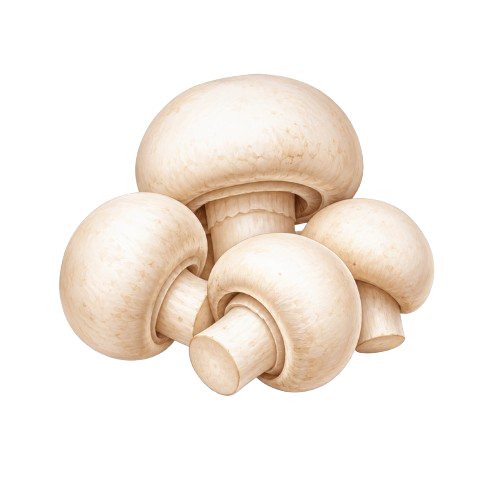
Champignon de Paris

Champignon de Paris

CompostIntermediate
Agaricus bisporus · Cogumelo-de-paris

The classic button mushroom, white and versatile. Grows in compost with a casing layer and needs cooler temperatures — the substrate prep is demanding, but it's the best-known mushroom of all.

Temperature
14–18 °C
Humidity
85–92%
Light
Not needed
Ventilation
Medium
Colonization
14–21 dias
Fruiting
18–25 days
Substrate
Straw + manure compost with a casing layer
Harvest
In flushes, roughly every 7 days
Practical tips
Prepare the compost well: it's the secret to a good button mushroom.
Apply the casing layer after colonization.
Keep the room cool during fruiting (14–18 °C).
Water the casing layer lightly, without soaking it.
Harvest before the veil under the cap breaks.
Ventilate to control CO₂ and shape.
Warning signs
Caps opening and showing the gills
Past the harvest window.
Dry casing layer with no pins
Casing wasn't watered enough.
Green mold in the compost
Contamination — review the pasteurization.
Mushrooms with brown blotches
Watering directly on the mushrooms or poor ventilation.
Ammonia smell
Compost hasn't finished curing.
Advanced note

The button mushroom depends on well-cured compost and a casing layer to fruit. It produces in waves: after each flush, keep humidity up and wait about a week for the next one.

Portobello

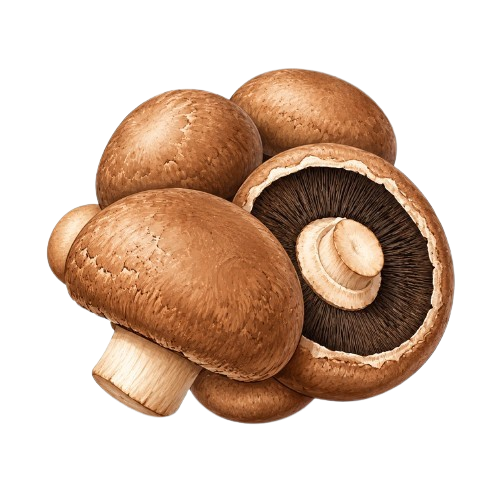
Portobello

CompostIntermediate
Agaricus bisporus · Variedade marrom madura

Portobello is the mature, brown form of Agaricus bisporus. It's grown in compost with a casing layer, just like the button mushroom, but is harvested later, once the cap is larger, open, and has a firmer texture. A gourmet option, valued for its size, intense flavor, and use as a "meaty" mushroom in cooking.

Temperature
14–18 °C
Humidity
85–90%
Light
Low / indirect
Ventilation
Medium
Colonization
14–21 dias
Fruiting
18–25 days
Substrate
Pasteurized compost + casing layer
Harvest
Large, open cap
Practical tips
Use well-prepared compost with no strong ammonia smell.
Apply an even casing layer after colonization.
Keep fruiting temperatures cool, around 14–18 °C.
Water the casing in small amounts, without soaking it.
Let the cap open more than you would for a button mushroom.
Harvest when the cap is large, firm, and still attractive.
Ventilate well to reduce CO₂ and avoid bacterial blotches.
Warning signs
Ammonia smell in the compost
Compost isn't well conditioned yet.
Dry casing layer
Casing lacks moisture; pins may abort.
Cap soft, dark, or overly wet
May indicate a late harvest or excess water.
Brown/yellowish blotches on the cap
Can be linked to excess moisture and poor ventilation.
Green mold in the compost or casing
Risk of contamination; isolate the affected block.
Dry, leathery cap
Air too dry or too much direct airflow.
Advanced note

Portobello is the same Agaricus bisporus as the button mushroom, harvested later. Let the cap open fully before cutting — that's what gives the variety its characteristic size and firm texture.

Ready to grow for real?

Create a free account and track your own blocks, harvests, and sales with CoguPlanner.